Peter Radizeski is Founder and President of RAD-INFO INC. He is an accomplished blogalyst, speaker, author and consultant. He has helped many service providers with sales training, marketing, channel development and business strategy. He is a trusted source of knowledge about the telecom sector. His honest and direct approach make him a refreshing speaker.

Look for his innovative ideas and analysis of current technology on his blogs.

Meet him at one of the many conferences he attends and speaks at.

Hire RAD-INFO today!

More Master Money Mania

Bridgepointe just got $100 million dollar investment from private equity firm Charlesbank CP. With the this tranche of dough, the master agencies have raked in about half a billion dollars in my estimate. Upstack, AppSmart, Telarus, Avant and Bridgepointe – and probably a couple of other smaller, un-hyped deals – makes a half a billion in investment. This won’t grow the revenue – it just moves from one partner’s books to the master broker’s P&L. This won’t create a marketplace or ecosystem or even a clunky e-commerce website for procuring telco and tech. This simply moves money around.

All of this in hopes of an exit.

If Jay is correct, and the procurement moves from channel to marketplace, and no one can build that marketplace, what happens?

Marketplaces work great for SaaS. Any software can find its way into a marketplace – just look at Google Play. Getting traction is tough for a marketplace unless it is an ecosystem of an anchor software like Salesforce. But this is off course.

Today’s announcement marks the tipping point. My guess is that more money follows this. Notably, TBI and PlanetOne have not taken money (because it would have to be walking away money.) Personally, I don’t want my deals in a PE-owned Brokerage. What happens IF/WHEN they don’t pay me? They certainly aren’t making these brokerages a swiss watch from my experience. This leaves a great opportunity for a regional broker to become a national player filling the gap. It would just take great marketing.

This tips over because all this money won’t produce a four-fold increase in revenue. Even if 4x the deals come in, how do they scale to handle it – and they only keep a portion of it! One million dollars in billable revenue is about $250K in commissions, whereby at least 70% is paid to the partner. That leaves $75K at the broker on $1M in billing. I’ll leave that there to ruminate.

I don’t see how this plays out. Where the exit is. SPAC?

Is It a Win-Win?

RingCentral (and some of their partners) are touting what a win the Mitel deal is for partners, customers, job seekers and workplace. For $650M I guess you HAVE to call it a win, otherwise shareholder lawsuits.

From one partner: “The recent RingCentral/Mitel partnership gives RingCentral millions of new customers. It puts Mitel customers who are ready to migrate to the cloud in the fast lane. And it also opens up thousands of career opportunities. We’d call that a win-win-win. (Is that a thing? It is now.)”

Does it give RNG new customers? Well, the MiCloud customers are now being registered on the RingCentral portal in order for partners to continue to receive their commissions, so I guess some revenue is being achieved. So technically they are new customers – new billing arrangements anyway.

The MiCloud customers already migrated to cloud as Mitel described it. Granted they are now on a platform that is end of life… But here’s the rub: These customers had the opportunity to buy RNG instead of MiCloud and chose not to. Why would they choose RNG now instead of any of NEC, Intermedia or any of the other UCaaS/CXaaS providers out there?

How does it open up thousands of jobs? Mitel had a huge RIF after this deal (just before Christmas 2021). Net net it probably doesn’t create jobs.

I think a lot of this is hope, smoke and mirrors. It made a splash, which a lot of these partnerships with RNG are. Verizon, AT&T, ALU, et al – 9 in all – and RNG is only growing at 36% YoY. Granted, Vonage is at 8% for UC+CC and 8×8 is at 18%, but RNG has deals with 9 giants that they paid a lot of money for. It is not paying off the way they need it to. Unless it was a stock pump-and-dump plan, then yeah it worked.

In the Mitel deal, RNG gets some revenue and if they can retain or upgrade some of them, great – they get some of that $650M back. If not, it was a gamble that didn’t pay off. Shrug and on to the next one. Not certain calling it a win-win-win right now is honest.

PS Avaya chasing Mitel partners (like HERE) is goofy. Mitel partners could have been selling RNG, ACO or any number of vendors but chose to die on the hill of Mitel. (And Mitel partners can sell RNG now too. Why would they “switch” to Avaya to sell RNG?

Market-mis-placement

In this Channel Insider article (or this interview where he says the same stuff), we get a summary of a Forrester keynote about how the channel is changing. Jay has been predicting the death knell of the channel as long as I can remember. [There will be Change, but there always is.]

“The good news is the channel is growing and full of opportunities.” That is true. But what segment of “The Channel”? There is not one channel; there are several. MSP, VAR, agent, ISV, dev, etc. Certain segments of The Channel are in turmoil due to M&A – mainly MSPs & Agencies. Another segment [VARs] is being swept up by vendors, like HPE, Dell and Cisco who are changing to a subscription or HaaS model. It seems like they don’t mean Channel so much as they mean MSP & VAR.

Also, Jay and Co. proclaim that businesses are procuring software from marketplaces. What types of businesses? Small, very small, mid-market or enterprise?

All marketplaces are not equal. “By “marketplaces,” we mean Salesforce, Adobe, Azure, Oracle Cloud Marketplace, AWS, IBM, Google Cloud, SAP, ServiceNow, Workday, Dell, Sage, Alibaba, Rakuten, eBay, Mercado Libre, and Walmart+.” How are eBay and Walmart+ comparable to Oracle? Where is Amazon on that list? Who is buying “tech and telco” from eBay?

If 90% of software will be procured through a marketplace, why did Telarus sign up Nord and Netacea sign up Upstack for distro deals this week when neither one is a distributor of anything but commission checks? They are brokers formerly known as master agencies.

If 90% of spend will be “partner assisted” does that mean partners end up being affiliates? It certainly sounds like if it isn’t “partner sourced”, then the partner’s compensation will be smaller. It makes me wonder who is paying for install, support, management, training and break/fix? The customer? For stuff they only rent? The partner won’t be able to for the tiny commission check. Microsoft lost a third of its partners when it closed SBS and tried to force Office365 on all partners. Not all partners want to sell stuff for a referral check. Mainly they like technology and watching it help businesses do work.

When you consider a $400 invoice, represents less than $100 to a partner to pay bills, comp sales reps, and support the customer, how many hours can you spend with a customer per month for $60-80? Not much.

Doug Dawson wrote about the data storage dilemma that is coming. There is also the power and climate problem coming. How do these conflagrations affect the current Forrester trends? Data centers are burning up too much power (and not enough of it is renewable). The cost of storing data will increase as more and more data is stored by each person and business – iCloud, Google, Amazon – photos, songs, movies, Instagram, FB, and on and on. Do these costs – power, storage, carbon offset and more – get passed along to the buyer? Yes. So all subscriptions will increase soon.

Will most businesses rent everything and own nothing? That changes the balance sheet and increases the cost of doing business. If you rent everything and store everything in the cloud, who controls your data? That gets into a whole other debate about privacy, security and liability.

“But the big change is that 80% of these partners will no longer collect customer funds.” The understanding is that if it is procured via a marketplace, the bill will come from the vendor or the marketplace; the MSP won’t bill for it or white-label it. Unfortunately, white-label and single-bill are not going away. Just look at cybersecurity and UCaaS where MSPs white label, bundle and bill for those services. If the MSP isn’t billing for it, again who will support it?

I see a different section of the channel and a different segment of businesses. I don’t have a data driven 10,000 foot view (and I don’t talk to enterprise CIOs, who quite frankly probably don’t know anything about procurement).

3 Scenarios to Re-tool

The transactional agent or sales rep who has been selling replacement services for years. Doesn’t matter if it long distance, SIP trunking, broadband or some other seeming commodity if the sales rep or agent has a history selling these products, getting them to sell more complex offerings like SD-WAN, UCaaS, CCaaS and so much more will require re-tooling.

You will need to re-tool the sales comp plan to specifically set it for the new goals. (This too will re-tool your sales team as some partners, CMs and reps will leave in the wake of a comp change like that. Yet this is the step needed to put a sales org in place for where the company and its portfolio is going.)

There will need to be heavy sales training and product training, which we have gotten away from. Too many businesses assume that a new sales rep will know enough to hit the ground running. The company they just joined has different policies, procedures, ordering, quoting, service delivery, SLA, comp plan, product portfolio, value prop, etc. For example, BroadWorks sold at one SP may rely on R16 of the software, while another SP is running R22. Quite a few significant differences in just that with the same softswitch, let alone how the SP has decided to package it, sell it, price it and deliver it. But who is training your employees on this annually?

In the same light that transactional sales reps and partners need re-tooling to sell solutions, the same can be said of channel managers. Some sales reps and CMs get hired for their Rolodex, with the company thinking that it will get some quick sales out of that hire via the contacts (rolodex). This thinking happens when the Necessities are missing – like Target, ideal customer, ideal partner, value prop. The hiring manager believes that anyone can use the product like it was soap or milk. That thinking is flawed because Ivory soap used to be the number bar soap sold in the US for years. Where is it now? It was the top loss leader product to get shoppers into grocery stores. Today, the soap aisle looks very different. Even milk isn’t for everyone unless you sell many varieties of milk like whole, oat, lactose-free, fat-free, almond, et al. So it is unlikely that any company’s service offering is for Everyone.

Like the sales rep – or any employee – the channel manager has to learn the ins and outs of each product, the procedures, processes, service delivery, value prop, as well as employees in various departments like porting, tech support and billing, since partners rely on a CM for everything associated with the vendor.

Another point is that if the CM has been working for transactional companies, there will be an adjustment period that coincides with re-tooling (training and coaching) to get the CM on the path to success. Signing some on-boarding paperwork and logging on to a portal isn’t the going to help your goal reach its sales goals.

In North America there are over 2000 companies offering UCaaS – it might be 2800 with all the service providers of every stripe who white label – all chasing the same market (10-1000 employees) with roughly the same features. So why would they buy from you? What makes you special? Who benefits the most from your service?

We have gotten away from researching who benefits the most (and how); of who the buyer is now; and what is the buying process. Basically marketing has become solely about lead generation without the fundamentals even being looked at. Marketing doesn’t just need a re-tool, it needs a reality check.

Scenario 2 is around the old PBX partners (inter-connects). It is not just mindset that gets in the way of them selling cloud comms; it is the business model. I have written about this before. The partner has labor costs associated with the PBX business that is expensive. The business has to maintain sales in order to retain its coveted partner status with the vendor – or lose support, MDF, discounts, etc. of the main revenue stream.

When your business is based on a $40K hardware sale, it is a long haul to run your business off of $1000 UCaaS deals even with $500 SD-WAN and cable combos thrown in. The commission on that is $250 per month, which is less than 1% of the old sale. The vendor SPIFF is Necessary in order to pay sales people, meet payroll, make up for lack of a professional services sale, etc.

The business model needs a re-tool with a business and comp plan in place to steer the company to MRR and cloud comms. It takes a plan because the business will need a runway and an C-Suite desire to see it through.

SPIFFs are often scoffed at. Some claim it is just buying business, but if that math works out isn’t that okay? Also, unless you have a branded in-demand product (currently that would be Zoom and Microsoft Teams), getting creative with sales comp might be okay. Take a page from auto sales or pharmaceutical sales!

If the the vendor isn’t going to spend dollars on creating demand or building a brand, then SPIFFs, MDFs and contests are what remains to get noticed.

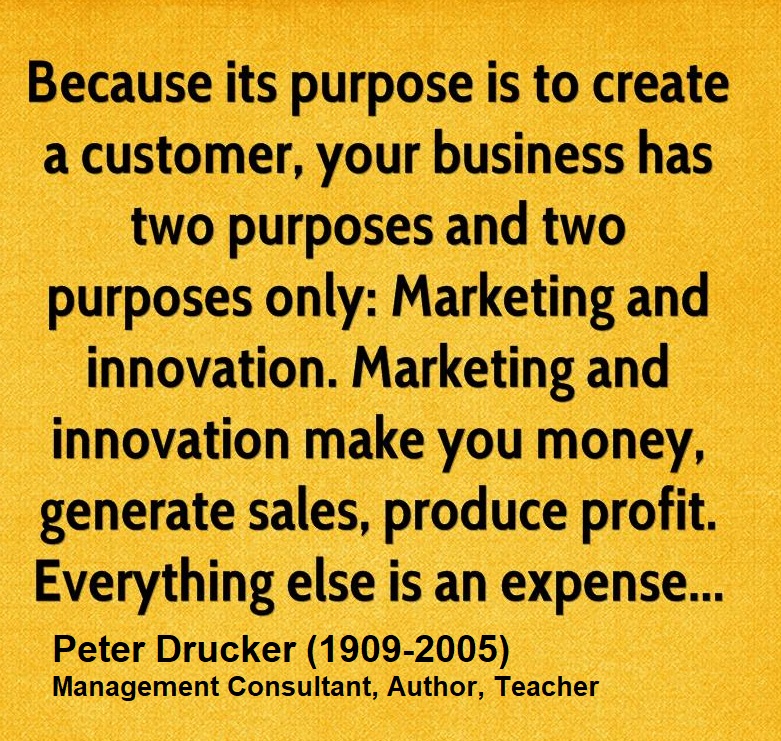
Drucker

  • Scenario 1 is transactional partners/sales reps/CMs.
  • Scenario 2 is hardware business model.
  • Scenario 3 is marketing dollars.

Necessities

While reading this article this morning, it got me thinking. I once told a rather large UCaaS CMO that 1-1000 wasn’t a market – it is at least 5 markets with different buyers, reasons, desires and needs.

As I work on competitive intelligence assignments, I am looking at features, pricing and other factors to help my client service providers differentiate from the leaders. In an industry that sells on price much of the time, this can be a challenge.

In an industry that is Me-too since the days of Integrated T1 offerings, it is a challenge to explain the Value.

I’ve used this slide in many prezos about what the industry looks like to the average buyer: It looks like the cereal aisle or the potato chip aisle or the cold & flu aisle. Take a page from any of those industries: Cereal, Potato Chip or the drug industry.

In the NSAID war, Advil and Motrin have the same ingredient. Aleve, Tylenol and Bayer are the biggest competitors to Advil and Motrin, but each using a different medicine or active ingredient. There are also combo drugs like Excedrin 3 and Goody’s Powder. This makes for a great example for the cloud comms space.

What’s your ICP?” What is your Ideal Customer Profile? Who is your target market?

“[T]oo many organizations don’t define their ICP or have far too broad a definition. As a result they chase everything, diluting focus and results. Focusing on everyone is no focus at all. Our ICP needs to focus on the customers that have the problems we solve–and we don’t solve all the problems of the world.” [e2e]

This all stems from a lack of basic marketing in this industry.

“Investing in marketing can help customers understand a provider’s solution offerings and the specific expertise that they can leverage.” [CF] “MSPs that provide the right level of awareness around their service offerings and educate customers around the differentiated capabilities and business outcomes that they can drive will ensure long-term relationships that deliver sustained growth and overall profitability.”

We are great at jargon and acronyms including SASE, UCaaS, Metaverse, Web3 and so much more.

For years on the TMC blog, I wrote about what a garbage term UCaaS was since no one shopped for it and most people were buying PBX replacement. The pandemic hits and hardly any UCaaS provider cashed in on messaging, Presence, and Video — especially not PGi or Cisco Webex, the two brands pre-pandemic. Zoom came out of nowhere to capture the market and the mindshare. SPs were focused on voice in 2019, not all of the other functionality of UCaaS. Microsoft was focused on team messaging and collaboration – and won 250M+ users (up from 75M pre-pandemic). UCaaS providers were never able to express how their offering allowed for various means of communicating in a flexible/mobile environment reliably.

In 2019, Cisco and RNG didn’t have a unified mobile app. Users had to have 2 or 3 apps to make calls, video chat and meet. It was during the pandemic when the softphones and mobile apps improved greatly. SMS was added to the fold, too. Most of this is a must have now. It is a checkbox on an RFP.

SD-WAN was another term that was too vague to explain the (at least) three varietals of how it was offered (SDN, NaaS, device). Now companies are looking for a new term to label the WFH varietal since SD-SOHO or SD-Branch won’t do.

How do you Differentiate?

Ease of use. Service delivery. Frictionless. Reliable. Secure. Great UX design. Customer Care – not service, but CARE! Talk about owning and using the service. Paint a picture of what the user is going to experience (CX).

Integration is important, too, especially for mid-market and above because workflow improvement. (BTW, everyone integrates with MS Teams and Salesforce, try something else!)

In all of this, SPs need to figure out who they are selling to – who is the Target? What is the Buyer Persona? What does the Target need or what problem are you solving for them? Then put together a concise, clear story.

Seth Godin says “Marketing is no longer about the stuff you sell but about the stories you tell.” The best examples would be Apple or Tesla – maybe Bitcoin.

So your necessities in 2022 are to formulate a value proposition, a Buyer persona (or two) and craft a story that will resonate with your target audience. It isn’t easy to do, which is why it isn’t often done.

This year if you don’t want to be selling for $10 per seat, you better have your story straight to explain WHY YOU and not them.

Need help with this stuff? Call the RAD-INFO Inc office at (813) 963-5884