Peter Radizeski is Founder and President of RAD-INFO INC. He is an accomplished blogalyst, speaker, author and consultant. He has helped many service providers with sales training, marketing, channel development and business strategy. He is a trusted source of knowledge about the telecom sector. His honest and direct approach make him a refreshing speaker.

Look for his innovative ideas and analysis of current technology on his blogs.

Meet him at one of the many conferences he attends and speaks at.

Hire RAD-INFO today!

Where Do Partners Fit?

We just want your customers!

The B2B technology marketplace provider – where do partners fit in that scenario? Aimed at Buyers, are partners just affiliates driving traffic to the marketplace? Is this the future of the channel partner (as an affiliate)?

In some ways this has been coming for a while. For anything other than networking and voice, many vendors have turned their partner programs into basically a Referral model. You give us the lead, get out of the way and we will close it (and pay you).

This shines the light on the vendor view that the channel is coin operated.

But if the partner’s sales were basically referral deals, how much does that partner own the customer? And if the roll-ups are just to get to the customer, what are they getting?

Many small businesses do not use a CRM. Partners are small businesses (solopreneurs in many cases). The contacts for that business have likely changed – due to time, M&A, employee churn, etc. So again what asset is being acquired? How are the roll-ups getting customers?

The PC Debate

There has been a debate about the master agency term as non-PC. Let me ask you then, when partners are “invested” and sign exclusivity agreements, wouldn’t that be a master relationship?

In 1999, there were partner programs that had exclusivity clauses in the contract (cyclical huh?) People got around that by setting up a new LLC or putting their spouse on the contract. It’s even easier today to establish an LLC.

The Wheels Are Falling Off

Why are partners rolling up the bases (or selling to master agencies)? There are many reasons including partners are getting ready to retire. Another significant reason is the carrier contract with quotas. The quota go up every year despite factors that would make it hard to meet quota. For example, network price compression means selling more and more just to stay level. Another example, CenturyLink (now called Lumen) is a merger of so many carriers: Sprint/Embarq, Qwest, Savvis, Elastic Box, Tier3, GukfTel, KMC, GTE, Level3 (itself a combo of many companies including TWTC) and they have spun off so much (like data centers and now ILEC), how do you meet quota if you only used to sell Qwest colo? How do you keep getting paid for the Qwest colo you sold? Roll it up. Carriers think partners are greedy; I have news for you, every company is greedy and mainly short sighted.

CenturyLink is also selling off a bunch of assets to PE. Will those partners still get paid?? What happens if you were only selling C-Link ILEC in those regions but now you have a quota to carry that you can no longer fulfill with your sales?

When I started in this biz in 1999, I was selling BellSouth. Every quarter BellSouth would move the cheese. Every single quarter. To me that is a failure at many levels. It also seems like gaming the program to screw partners. It is that kind of mentality that leads to a coin operated un-loyal partner program.

It is all about self-interest. And you are partners while your self-interest align.

I’ll leave you with this last question: Do carriers start to play hard ball with Quota and MDF – and effectively mess up the partner ecosystem as it stands?

Hybrid Office Policy

Hybrid is always the way – in technology and in people. With a Hybrid approach to the office, it will be high time to put clear but effective policies in place for employees around eligibility, promotions, hiring, security, technology and other components. A written policy makes it fair for all. And the transparency allows employees to understand expectations.

A remote workforce presents challenges for management and employees. Managers have to trust employees and learn how to engage and coach them – mainly without being around them. Technology can fill some of those gaps, but managers will need to learn how to leverage the tech and learn to coach.

Writing a Work from Home policy doesn’t have to be overwhelming. There are some good tips here (https://lnkd.in/gB6a6qs) and several #WFH templates are available online. If you are looking to customize one for your business and your employees (I don’t think one size will fit all!), my wife Maggie Lima Radizeski  would be happy to work with you to create a policy or talk you through it. She has experience as a para-legal and is a certified HR professional. You can message her on LinkedIn or you can call the RAD-INFO INC office at (813) 963-5884.

Musical Channel Chairs (part 21)

Note that in 4Q-2021 results, Channel bookings grew 7% year-over-year and represented 53% of new bookings at 8×8. In 1Q-2022 there isn’t a notation about channel contribution. In the investor deck for 4Q-2021, the channel gets a section on slide 9:

Channel Momentum
■ Channel represents 40% of total ARR and grew 38% year-over
■ 5 of top 10 new bookings from channel partners
■ 1,264 active channel partners, 22% year-over-year growth* <A far cry from the 9000 one master agency claims & the 5000 another claims.>

But in 1Q-2022 there is no notation about channel contributions. And then 8×8’s Channel chief leaves to run Intelisys for Scansource. This allows 8×8’s CEO to put his own person in. We’ll see how that works out since most Channel heads don’t make it 3 years. Meanwhile for DeLozier, people tell me it so much easier to work for master agencies after working as a vendor.

Scansource had replaced the original Intelisys personnel with Greenville SC people, but now they are back filling with “Channel” people like DeLozier and Sterl. DeLozier succeeds Mark Morgan, who will move to the role of President, Global Business Strategy for ScanSource Inc.

Scansource also has a new President: Tony Sorrentino now serves as ScanSource’s president of North America. Lots of musical chairs at this VAD.

Running a VAD is different than running a master agency. (And yes I understand that people would like to change that term to something else like technology distributor.) Luckily, DeLozier spent many years at Arrow. Channel people “get” partners; VAD people seem to tolerate partners. [An exception being Ingram Trust Alliance.] VADs are more vendor focused. They know they need partners to move all that stuff in the warehouse in order for that stuff to become cash, but it isn’t a worry really. They have partner events but events are vendor oriented. They worry about logistics, margin and MDF. Maybe when the masters get larger, that will be their focus too. [I hope not, but I could see it happening because private capital forces these things.]

I constantly try to figure out how all this plays out. At some point, the quotas, contracts, promotions and MDF will just come to a boiling point. When that happens, hard decisions will get made. Maybe someone can call that guy who was running WIND’s channel so he can tell you how to cut off partners income – and be like NBD!

As my buddy says, “I don’t see a lot of moves that help customers happening.” Me neither. In some ways these moves may help partners, but rapid change and constant musical chairs helps no one. A company needs people in place for 3 years in order for any strategy to execute. It needs to demonstrate stability for partners to sell them. Lots of personnel changes over a short span are not reassuring.

I wonder what moves Scansource will make in the wake of the current M&A environment. Jenne keeps plugging along as a master agency and VAD. Tech Data is merging with SYNNEX just months after Apollo bought TD. Ingram just changed ownership. Upstack just announced another acquisition. It is amazing the number of partners that are taking a deal. I get it; it is exhausting to be doing this for 20 years. And it seems more exhausting the last two years than ever.

Partners think that TD or Ingram have to acquire a master. There were supposedly similar deals ready to ink when Scansource acquired Intelisys in 2016. The other mergers never materialized. CDW, like the other distros, has a telecom department. CDW probably has one of the largest commission wise. Does D&H or Insight finally get in the game?

Would it make sense for them to buy Sandler Partners? I don’t see TBI or PlanetOne selling unless it was Big-F-U money that they could walk away with.

There are a few companies that are working on a platform to make sales easy for buyers and partners – AppSmart, Lightyear, Upstack, COLOTRAQ. One problem: there is no way in telecom to order from the carrier via a “marketplace” or portal. Heck, how do you even place any order with some of these carriers (C-Link)? So if partners can’t do it manually without headaches, how would any of the platforms?

Sure there are some lines of business that can be procured that way: colocation, UCaaS, SaaS, devices, maybe SD-WAN, but most everything else requires human intervention and interaction. That’s where that whole marketplace / platform falls down.

If the marketplace did work, then Amazon would be selling Comcast (it tried that in 2016) and Chime would replace Zoom. Additionally, partners would end up being just affiliates, which would be awful. Affiliate commissions peaked around 2006. Lots of reasons why this wouldn’t work as a model.

But hey maybe if you throw $150M at it (3x the Berkshire Partners’ investment in Upstack) at. I don’t know how much Amazon threw at it but they do still sell cellular service. Software vendors have the ability to sell through a marketplace; carriers and other types of service providers may not be able to due to legacy BSS/OSS systems running their business. If Lumen had brought in a BSS/OSS SaaS vendor when it acquired Level3 in 2017, it is likely that it would have a chunk of business on the new system and could start closing down old systems. Instead the org is at the point where they can’t find anything or access systems, like when FTR took over VZ territories. Who has the keys and passwords? No one?!!

It is amazing that they can make any money at all. (And funny that they blame legacy regulations on costing them money.) Any how…

Now Lumen is trying to unload ILEC copper plant. That should be awful for the consumers. It is unfortunate that Apollo will be late to the game to try to take a share of all the government broadband funding going on the last two years. Despite the billions in tax dollars handed to the incumbents we still don’t have fiber to every household.

Things are a changing. I am just musing here. Any thoughts would be greatly appreciated.

Cloud Comms M&A

The UCaaS/Hosted VoIP space has needed consolidation for years. Way too many providers, not enough buyers despite the TAM estimates skyrocketing. Even in the midst of a pandemic, the move to cloud communications spiked but did not sustain. That means more consolidation especially with all the easy and cheap money floating around looking for returns on subscription revenue.

Skyswitch (a white-label provider utilizing Netsapiens softswitch) to BCM One. BCM One has also acquired WCS (a bandwidth reseller); Siptrunk.us; SIP.us; nexVortex (managed SIP operations); Arena One (Broadsoft based UCaaS provider in NY); and a partner of theirs, LincLogix, since February 2019. It gives them a BSFT UCaaS offering; a white label platform and a lot of managed SIP trunking.

Crexendo, a publicly traded UCaaS provider, purchased Netsapiens, a softswitch. This deal is still a mystery to me. BCM One and Axxess Networks should help Netsapiens grow users in the US.

Microsoft grabbed Metaswitch and is slowly bringing that to market in Azure Cloud and Operator. As MS Teams hits 250M monthly active users and 80M on Teams Phones monthly, Microsoft is winning. They also have a CPaaS platform, so they are just missing contact center.

AWS acquired Wickr, a secure collaboration tool used by the U.S Air Force. AWS offers Connect (CPaaS and CCaaS) and Chime (video). It seems that AWS is pushing into enterprise cloud comms with all the pieces – API, contact center, video, collab and voice. This will put them up against Twilio, Vonage, Microsoft and others. If they made it easy to add Amazon Payments, e-commerce and self-serve for businesses,they would hit $2T in revenue (yes trillion). Amazon reported Amazon Web Services (AWS) revenue of $13.5 billion for Q1 2021, up 32%.

Sangoma buying Star2Star. S2S was looking for an exit; Sangoma is like a holding company for all things VoIP: S2S, VoIP Supply, e4, VoIP Innovations, Digium (Asterisk), Schmooze (FreePBX and PBXact), RockBochs (fax) and Micro Advantage (partner). This allows for offerings in CaaS, TaaS, UCaaS, MaaS, DaaS, FaaS, CPaaS and ACaaS according to Sangoma.

Vonage mixed all its offerings – CPaaS, CCaaS, UCaaS, VCaaS – into one bucket (VCS) two years ago. Then 8×8 did it earlier this year (calling it CXaaS, as if we need more acronymns that buyers don’t care about or understand!) This is just the showcase for the UC+CC era that buyers are examining. The highlight of that is Zoom acquiring Five9 for $14.7B last month to get some of the $26B cloud contact center business!

Broadvoice acquiring GoContact to add CCaaS to their UCaaS service offering (and get global reach since GoContact is in Europe).

Dialpad buying Highrise and merging that plus UberConference into one app. (Their new name for it is TrUCaas according to Dialpad PR dept.)

So much activity that leaves many wondering about outcome – will they be able to integrate? What will the new offering look like/cost? How will they implement it? Will it work?

While all this integration is going on, the rest of the providers better grab some market share. Zoom and Microsoft (and to a lesser extent RingCentral) are taking all the air in the room. It doesn’t leave much for the rest. I think that the top 20 providers will see 20%+ growth YoY but the rest of the group (#21 to #2001) will only see single digit growth. They just can’t compete with the branding, marketing, and sales strength of the top tier providers, who spent 10+ years putting it all together.

Additionally, there is the thinking: Do Buyers really want one vendor for all things? That is the thinking behind ecosystems & marketplaces, right? One stop shop for all your needs – like Aldi or Whole Foods, which in both cases is an example of one size does not fit all.

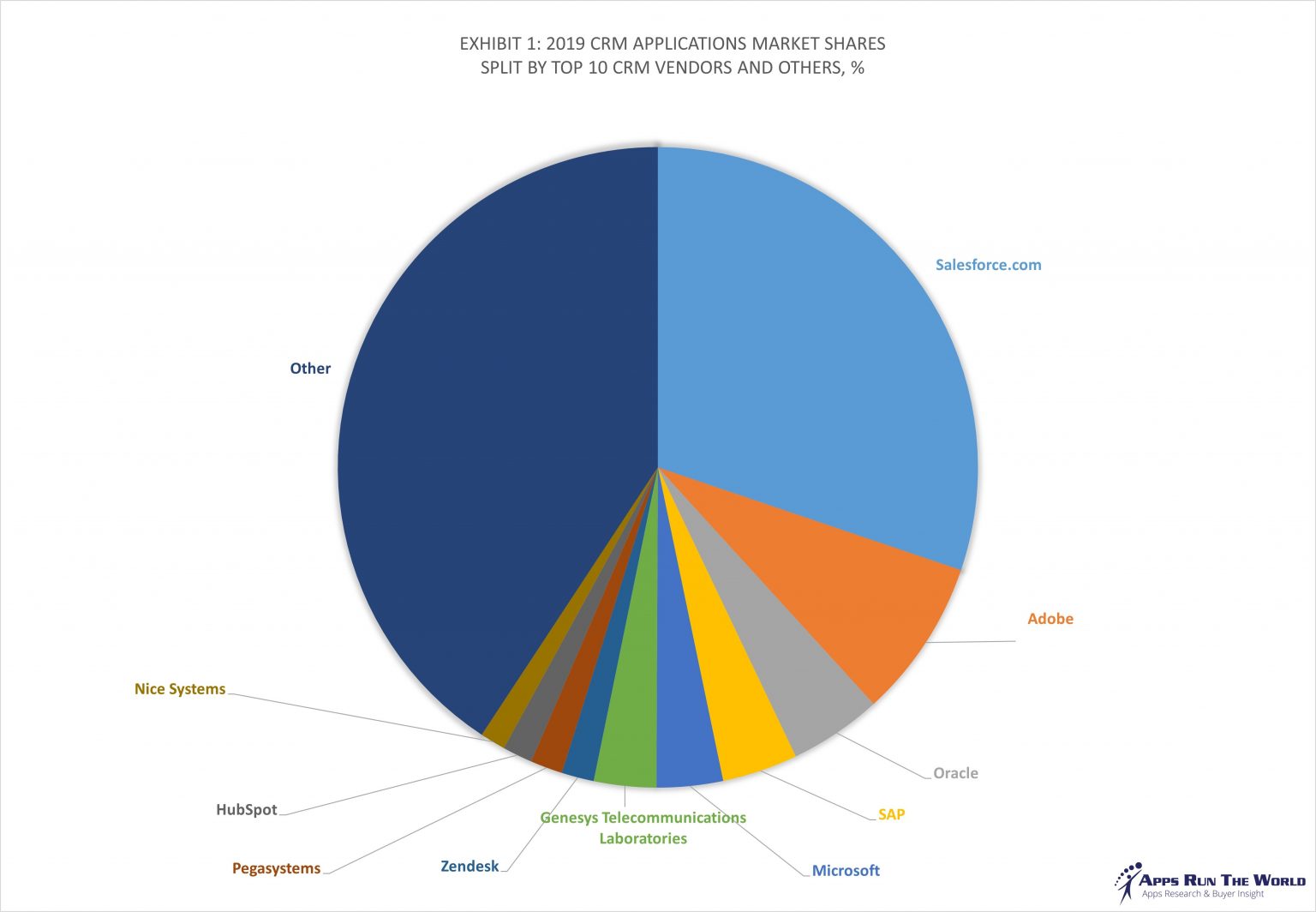
Enterprises in the past have purchased best of breed software, not an all in one. If they did, Microsoft would be the number one CRM (Dynamics 365) instead of fifth.

It is in flux, but then it is always in flux, except right now the rate of change is faster.

The things about consolidation: (1) synergies are harder to find in reality than on paper; (2) telecom integrations rarely come through; (3) fewer vendors hurt partners, distributors (decreased MDF) and buyers (less choice).

Zoom Buys Five9

Zoom announced today that it will buy CCaaS provider, Five9, in an all stock deal worth about $15B (~$14.7B). Five9 just announced annual revenue of ~$550M with EBIDTA of ~$88M. Do the math?! (Plus Five9 is NOT profitable, losing millions every quarter.)

The CCaaS TAM is approximately $24B; Zoom is spending more than half that to grab some!

Zoom has the cheapest UCaaS/phone service at $10 and saw the fastest rise to 1M users in just 24 months. It now sits at 1.6M UCaaS seats. Zoom wants more enterprise accounts; it thinks Five9 gets them there. We’ll see.

A bunch of execs woke up this morning and choked on their coffee because they signed partner agreements with Five9 — Nextiva and Mitel to name two! What do they do now?

There has been speculation for months on what CCaaS player Zoom would buy. Many thought TalkDesk due to price. I thought Aircall due to price and its ability to get Zoom into Verizon deals, which would have included enterprise deals. It would have been a lot cheaper. However, since this is all stock, maybe the other two wanted cash — since both companies are VC backed, they undoubtedly would prefer cash to stock.

Zoom has one more problem to fix: phones. They have a Broadsoft like list of features but they lack the ability to turn up devices without headache and could use some serious VoIP specialization. Who do they buy?

Let’s talk about the Omdia Top 25: RingCentral, Zoom, Microsoft, 8×8, Cisco, Verizon, Comcast, Sangoma, Mitel, LogMeIn/GoTo, Vonage, Fuze, Nextiva, Intrado (West), NetFortris, Dialpad, CoreDial, Intermedia, Ooma, Fusion Connect, CenturyLink, Windstream, Masergy, and Evolve IP. Many of these companies are too expensive (in blue). 8×8 market cap is $2.7B this morning. Some are a bad fit: Sangoma, Fuze, Fusion, LogMeIn, Masergy and Intrado. They need a pure play UCaaS provider.

Dialpad is the best fit but they suffer the same issues that Zoom does (sorry Craig!).

I don’t think Coredial or Evolve IP are for sale. Zoom could do what Intrado (West) did when they acquired OnSip – buy a small, efficient service provider. There are a number of those.

Ooma doesn’t get them mid-market or enterprise deals.

Netfortris doesn’t either and the Fonality division may be something that kills a deal.

Mitel and Nextiva are good fits because they are both for sale (per rumor) and both partner with Five9. Mitel might cost $2B but Nextiva would be about $1B.

Fuze is possible because they are always for sale, but something must be wrong there that no one has bought them yet.

Another possibility would be Intermedia whose S1 filing valued it at $1.5B, but Intermedia has a CCaaS solution.

A few asked me what does RingCentral do now? Well, they can’t buy NICE InContact. NICE market cap is $16.3B this morning. It would cost RNG $19.6B to buy them. RNG has a $22.5B cap and acquired a CCaaS solution named Connect First. Anaylsts might tank the stock if RNG tried to buy NICE. Here’s what they see:

“March 2021: RingCentral had debt of US$1.37b, up from US$1.04b in one year. However, it does have US$463.1m in cash. According to the last reported balance sheet, RingCentral had liabilities of US$444.4m due within 12 months, and liabilities of US$1.41b due beyond 12 months.” [source]

“Currently unprofitable and not forecast to become profitable over the next 3 years.
Significant insider selling over the past 3 months.
Shareholders have been diluted in the past year.” [source]

Some pundits say this puts pressure on Microsoft and Salesforce. How? They are two of the largest and deepest SaaS companies. MS Teams has 175 million daily users. Each of them can acquire a cloud contact center solution tomorrow. Pick one: NICE, Lifesize, Aircall, Talkdesk, Enghouse, UJET.

It puts pressure on RNG and Cisco. Cisco just leveled up its Webex Calling (and is still far behind Microsoft). It’s Contact Center needs help, too. This certainly changes the CCaaS landscape, just as customers are clamoring for a UCaaS+CCaaS solution.

Buyers will be looking for stability on top of functionality and execution now. For Zoom, M&A means integration hassles for about a year. Meanwhile, CCaaS execs will be focused on M&A instead of sales and execution. That means if you are in a stable org, you can steal some market share from the confused and distracted.

PS: the CCaaS TAM is valued at around $28.6 billion by 2025. And Zoom spent $15B to buy a piece of it!!!

Zoom’s revenue is $2.65B. Zoom’s customer base: 467K customers with more than 10 employees, up 470% YoY. Just 1,644 customers contributing more than $100,000 in trailing 12 months ARR.

Quite a few UCaaS providers have end-point management issues. Phonism (note: I am on the Board here) is a SaaS platform that could solve that problem for all/any of them.