Peter Radizeski is Founder and President of RAD-INFO INC. He is an accomplished blogalyst, speaker, author and consultant. He has helped many service providers with sales training, marketing, channel development and business strategy. He is a trusted source of knowledge about the telecom sector. His honest and direct approach make him a refreshing speaker.

Look for his innovative ideas and analysis of current technology on his blogs.

Meet him at one of the many conferences he attends and speaks at.

Hire RAD-INFO today!

Competing Against Cable and Telco

Of the webinars and talks I have given, How to Compete is the most popular.

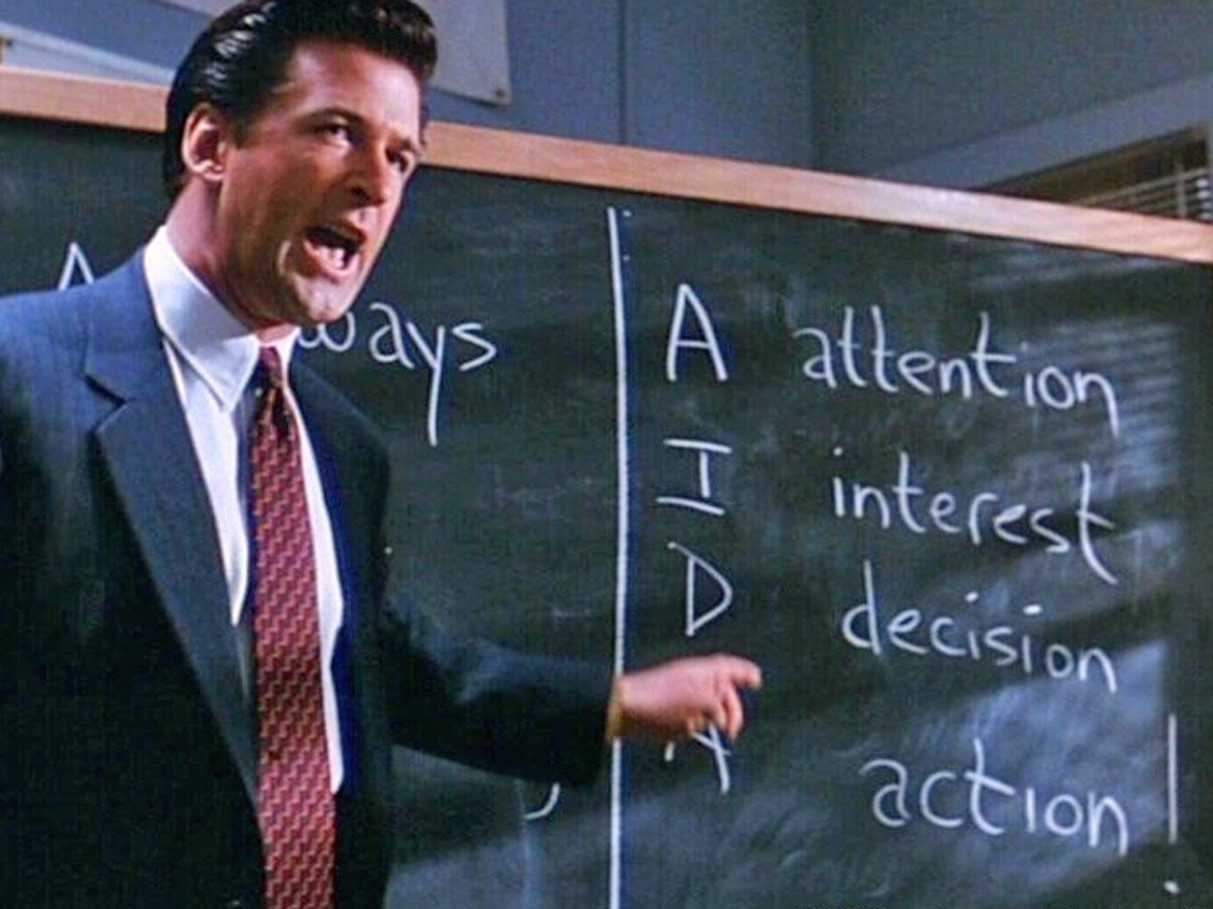
After several emails this year about competing against AT&T and Spectrum, I thought I would do this webinar again.

This will be a 2-part seminar – 45 minutes each. (Hard stop provided by Uberconference at 45 minutes).

So I will be going over some tactics and exercises and you will have the chance to come back for an interactive session.

The first part is on April 19th at Noon Eastern. Part 2 is April 26th at Noon Eastern time. Both sessions are one low price $29.95!

If your team needs some tips on how to beat the big boys, this is the call to be on! REGISTER NOW!


Top VoIP/UC Providers in the US (2019 Edition) by Category

One online magazine for the channel posted their Top 20 UCaaS Providers list again with some analyst color commentary.

Most of the lists and reports are pay to play.  But to be fair, if you do not pay for engagement with the analyst (or fly them to your show, put them up in nice digs and feed them well) they won’t know enough  so that they can write about you – or add you to a report or MQ.

There are 2000+ companies in this space. It is the potato chip aisle in the grocery store. (Yes, it is that bad!) One exception is that since most don’t brand or market, the average buyer has NO idea who they are, so they buy Doritos.


Here’s my list – by category.

Mobile UC:

  • Metaswitch Max UC
  • Counterpath
  • VZW One Talk

SMB UC:

  • broadvoice
  • Panterra
  • net2phone
  • Intermedia
  • Saddleback
  • TPX
  • onSIP
  • Telesystems

Regional UC Players:

  • PBX-Change
  • Altus
  • Nexogy
  • C Spire
  • Stage2

UC in a Platform:  

Vonage, Nextiva, 8×8 and RingCentral  [want to be everything to everyone]

Enterprise Cloud Comms:

  • Evolve IP
  • Fuze
  • West
  • VZ with Cisco HCS

The winner in Enterprise will be Microsoft and Cisco due to certified brand ambassadors internally.

Cloud-enabled UCaaS:

  • Avaya
  • Mitel
  • Star2Star
  • NEC

Messaging with extras:

  • Slack
  • Webex
  • Microsoft
  • Panterra

CPaaS:

  • Vonage/Nexmo
  • Twilio
  • Intelepeer
  • VoIP Innovations
  • Plivo
  • Kandy by Ribbon
  • Telestax RestcommONE
  • VoxImplant
  • Tropo

I think CPaaS sales will grow faster than UCaaS. I think most businesses don’t need a full stack of CP+UC+CC. Most need dial-tone, SMS, a few other functions.

Built for Cloud Contact Center:

  • Telax
  • TalkDesk
  • Amazon
  • Twilio
  • AireSpring AireContact
  • inContact
  • 5 Nines

UCC:

  • Amazon Chime
  • GoTo
  • Microsoft
  • Webex
  • Dialpad
  • Workplace by FB
  • Arkadin
  • PGi

White Label:

  • Re-Invent (Saddleback)
  • Coredial
  • 2600Hz
  • Bicom
  • Skyswitch

Also ran:  Google (interested in their Cloud Contact Center AI)

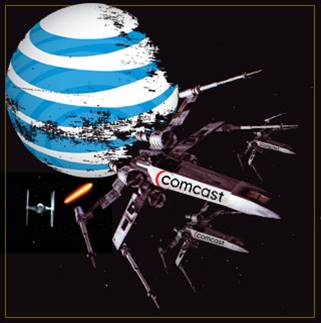
Telcos:  Comcast, AT&T, Verizon, Granite, Bullseye

Not Sure What they are doing:

  • Spectrum & CenturyLink – do they even sell UC anymore?
  • Windstream is in BK. Who would sell a bankrupt service offering?
  • Fusion = Megapath + Birch ??? – all I hear is blah blah cloud
  • Masergy – more global network than UC; that BSFT is collecting dust.
  • Momentum – cable white-label + Alteva + ILEC
  • Jive – not sure what happened after GoTo acquired them
  • Bandwidth – mostly Google revenue, CPaaS, DIDs and minutes
  • Calltower  – a Microsoft shop with some other services
  • a plethora of other providers


Here’s why you didn’t make a list?  You don’t (a) market effectively; (b) booth at some expos; or (c) engage an analyst.

Most providers want to be all things to everybody. We have AT&T, VZ, Comcast to fit that bill. We also have MS & Cisco owning the Enterprise market. And Slack, Google, Facebook and GoTo as well. So how do you differ/compare to those guys? You better have a really good answer.

Alternative Strategy:

Find a Target. Have a solid Value Proposition. Cater to a Tribe!

Most VoIP Providers do less than $10M in revenue.  At $20 per seat, that is 40K users. Aim for that. Aim for 40K users. Build a Strategy for that!

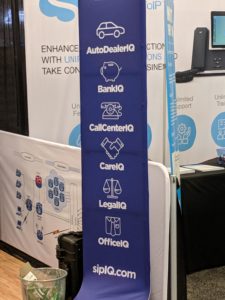
If you chase just dentists as one provider does, 10% of that vertical is 32K accounts!!  Not users, billing customers.  So many verticals, so many ways to win, so few have taken that path.

Two roads diverged

(Note: Jive, sipIQ and Phone.com have some vertical integration.)


RingCentral and the Rest of the Field

Raymond James thinks that RingCentral Can Sustain 30% Growth Rate.

While there is certainly room in the marketplace for growth, I don’t think RNG can sustain that level of growth.

When they were growing that much, RNG was spending 60-plus cents on every revenue dollar on sales and marketing. Now that is down to 41-cents. It is an unsustainable spend, especially with the losses every quarter.

RNG has bet on the mid-market and enterprise business segment. Except those segments are being challenged by incumbents – Cisco and Microsoft. Hard to displace the two companies with certified brand ambassadors working within.

On the revenue growth: while they announce these huge deals (TCV = $1M) do they ever actually realize that ARR? Deployment takes time; snags happen. I don’t see a slide in the investor presentation about actual realized revenue as opposed to suspected.

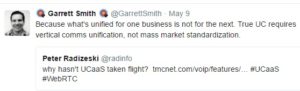
Also, if Enterprise Connect is any indicator, UCaaS will be steam-rolled by CPaaS and an app marketplace on one side and CCaaS on the other.

Other Factors:

Zoom is going public. How will that affect the marketplace? Probably not at all once the stakeholders cash out. I have a bleak view of sales aggression post-IPO.

Avaya is for sale. Rich Tehrani thinks it is because Avaya ignored the changes in the marketplace for too long.

They call that shift the Digital Transformation. It is a struggle to sell cloud services to premise minded buyers. This is the struggle most of UC is facing.

When you tell a business owner that the MRC is going to be $500 per month and he doesn’t own anything, he balks. That is a tough hurdle to jump.

The Other Three

8×8 and Vonage weren’t up to the task of fighting Ring in 2018. Buying companies, re-organizing, playing musical chairs in the C Suite were all distractions last year. Now in 2019, it will look more like the Elite 8 – a little March Madness.

I thought it would be a 4 way rumble with Nextiva as all 4 are platform companies more than UCaaS shops. However, rumor is that Nextiva is looking at a sale, so down to 3.

Branding Gone Wrong

Another obstacle for the sector is the inane naming. 8×8 has an X platform. Well that is a server line from IBM/Lenovo. Not good SEO.

InContact renames as CX-One which is similar to BSFT One.

And Vonage launches CX Cloud Express.  Some marketing firm got paid a lot of money to miss it by that much.  I mean you all have similar features and functions but now you are looking to name it the same.

BTW, the channel go to market strategy at RNG that they discuss at CRN is the same at 8×8 and Vonage.


SIDE NOTE:

I would suggest that this move (Vonage brings number programmability to its business service) is probably the strongest move for a majority of the marketplace (1-100 employees). CPaaS for the win.

Elements of a Successful SaaS Business

There are many elements of that go into a successful SaaS business.

The foundation is the Product Matrix. You need a good product with a clean UX design that is easy to use. There has to be a Product/Market fit. There has to be a pain point in the market that you are fixing.

Or in the case of AirBnB and Uber, you make a process easier AND make the product cheaper. The Race to Zero abounds.

Next you have to have Deployment or Service Delivery. In the case of many SaaS products like CRM, email, payroll, QB, et al, there aren’t that many moving parts. However, in the case of UCaaS and CCaaS, yes, indeed, there are many moving parts. There is much to do pre-sale and post-sale in order to implement the solution to the customers’ satisfaction. This is a problem for many telcos and service providers. The no truck roll policy as if zero touch provisioning wasn’t the same as Microsoft’s Plug n Pray in the 90s.

Lest we forget, we need a Sales Engine. Both direct and indirect sales channels are in heavy use today to keep Wall Street happy. (Cuz Wall Street is the real customer for public companies.)

In the case of the indirect channel, there are a number of components needed to have a prosperous program. Training, Compensation, marketing collateral, portal, deal registration and a pro-channel attitude are requirements. There is more to it than that, but I have written about that before.

The other piece is the marketing. The Buyer Persona, the target audience, the Value Proposition, the collateral, the training, the customer experience, the product design and a whole lot more makes up marketing.

Product + Deployment + Sales + Marketing = Success

If any one of these elements fails, game over until it is fixed.

The Sales Teams have to trust that the Product works and will deployed for customer satisfaction; otherwise sales stops selling. [This is a problem even with direct sales teams.]

If the marketing is bad, the sales teams have to wing it. Why is that bad? Product/Market fit includes value proposition, target market and buyer persona. Without these 3 ingredients, sales teams will have to cast a wide net, waste time on prospects that will never buy, and get frustrated.

All of these things are tied together.  And in a perfect world there would be a feedback loop that would allow sales and marketing to help the product get so good that it basically sells itself.


FISPA and AT&T 2019

FISPA has gotten out of the business of group buying. When I was interim director, it was a mess. Here’s the messy parts:

1) Some members do not pay bills on time. This results in disconnect notices that AT&T and FISPA have to chase down.

2) Some members were just plain rude. Swearing at me on the phone.

3) Billing disputes – yes AT&T sucks at billing (it is said that it is designed as a profit center) – but YOU KNOW THAT and have to accept that if you are going to buy from them. PERIOD. End of story. But members don’t want to accept that – nor do they want to take responsibility for their bills and billing disputes. Two members have over $150K in billing disputes. One member has excessive billing disputes with every carrier!

4) The board is volunteer and not very responsive.

I didn’t think that FISPA should be spending money and resources on billing disputes. In fact, on the bigger messes, I wanted to shut the member off – and invoke the contract that they had with FISPA. I was overruled.

The former ExDir had started billing end users for the ISP and then cutting a check to the ISP. So FISPA became the ISP and did billing and collections.

All of this burns up time and real money as the 1099 workers bill by the hour. So if a TEM specialist comes in to clean up a mess, FISPA pays for it in real dollars. If someone has to spend time fixing these disputes, they have to get paid by FISPA.

Why should FISPA members pay to clean up the mess for bad actor members?

Bottom line: the way the programs are run are just plain unprofitable.

Just to bill the DSL surcharge takes 8-10 hours of work.

The AT&T program alone is a collection of legacy products: BellSouth DSL, T1, Metro Ethernet – on top of the APEX program items like MIS/ADI, ASE, Broadband. It is a big hair ball.

The cable programs are labor intensive. For Spectrum, FISPA has to beg for an electronic copy of the bill from Spectrum each month, manually enter it in QB, email the bills, then chase collection. Meanwhile, FISPA floats the bill they paid to Spectrum.

I get that FISPA stopped taking credit cards, but even that was a mess as the credit card info changed often for members. And auto-pay by ACH was not cheap with BoA!

On to the ISP Business Model:

For years I have said either go Layer 1 to own the network or go to Layer 7 to own the customer like a any SaaS or MSP player would.

A good number of members have built out some network – wireless, fiber or both. That’s the way to have better control.

Not everyone wants to become a network operator. I understand that. But understand that your vendor is your competitor and they suck at being your vendor – and just deal with that fact. [That is where most of the headache comes from: not accepting that the ILEC doesn’t want to be your supplier.]

Now FISPA’s President has made some crazy statements. He recently stated that the most successful members have built their own network. Um, some of them have. Note that most members don’t even own 50% of their network. Every member still do a large percentage of relying on the ILEC — even one FISPA’s largest members. It is disingenuous to say otherwise. HIS business model is different; doesn’t mean he has the only right business model though.

I know it looks like FISPA kicked the little guy in the balls. (I know you cuz many of you told me in colorful terms.) And many of you skipped the meeting in Feb.

Well there are board seats available. And you could run for the board and change things. You could but you won’t. You will take your ball and go home and hate on FISPA. It is a member owned and run organization by volunteers. If you want it to be better, you have to lend a hand and put in the effort.