Peter Radizeski is Founder and President of RAD-INFO INC. He is an accomplished blogalyst, speaker, author and consultant. He has helped many service providers with sales training, marketing, channel development and business strategy. He is a trusted source of knowledge about the telecom sector. His honest and direct approach make him a refreshing speaker.

Look for his innovative ideas and analysis of current technology on his blogs.

Meet him at one of the many conferences he attends and speaks at.

Hire RAD-INFO today!

Cable Will Destroy the ILECs

While AT&T and Verizon focus on 5G, acquisitions and almost everything that is not their traditional business, Comcast and Spectrum are eating their lunch!

CenturyLink is too busy with its Level3 acquisition to be effective. Yet they weren’t that effective BEFORE that either retaining business.

Comcast Business is a $6.5 Billion CLEC that started in 2006. Every single dollar that Comcast Business or Spectrum Business gets is taken from the ILEC. Windstream and Frontier cannot afford that at all.

As Comcast (and literally every other provider) rolls out SD-WAN, this will eat revenues from the Big 3 ILECs faster. SD-WAN is mostly rolling out to retail, restaurant and branch offices. It is mostly with a broadband connection and 4G. That is a T1 or other TELCO revenue, now gone to Cable and Cellular.

Granted some of that revenue goes to AT&T or VZW as 4G, but most of it goes to cable for broadband. Also, as SD-WAN starts to replace MPLS and other WAN connections (and as T1 circuits sunset), all of THAT Telco revenue disappears from CenturyLink/Level3, AT&T and Verizon.

They are not going to replace that margin with cellular, ads, TV or other. Everything is not a sunk asset like the telecom network that they have milked since 1900.

You could say this is gloom and doom, but it is the reality.

And it will be tragic for the industry.

At what point does the cable broadband service stop being a reasonable replacement for T1?

At what point does 4G become too congested?

We’ll see it in the analytics, since SD-WAN is supposed to add transparency to the WAN. Should be interesting because cable loves to raise prices, especially when they are the dominant provider in an area.

Consumers are screwed!

But so are the ILECs. All that juicy margin from MARCON contracts with Fortune 5000 going south.

Organic Growth?

Most companies are NOT in growth mode.

Traditionally in our space organic growth is like 4-8%. Fusion Telecom says that organic for them is 2-4%. It is why they chose acquisition as the mode for growth. However, as Birch (now Fusion) has seen especially with the CBeyond purchase, not only do they have poor growth, they suck at customer retention too!

Most M&A results in customer loss. Ask Frontier, Fairpoint, etc.

We are seeing layoffs across the merged world: Windstream, CenturyLink, now Impact (TNCI). Impact has cut its channel.

Hosted VoIP is TOO crowded. Too many providers; not enough good sales people – and more important, not enough demand from the marketplace.

When Hosted VoIP started, several providers offered Retail, Wholesale, White-Label — just anything for revenue. We are back to that now.

There are ways to fix it so there is organic growth. Going Vertical for one!

Unfortunately, VoIP, UC, Conferencing, cellular and now SD-WAN – to the Buyer – look like the drug aisle.

Fiber to the Home folks achieve big growth with each new project; so growth is out there, just maybe not in the puddle of the marketplace that you are choosing to do business.

LogMeIn Buys Jive!

Not Jive Software but Utah based Jive Communications is being acquired by LogMeIn for $342 million in cash plus up to $15 million based on reaching specific milestones in the next two years.

“Upon closing, the deal will accelerate LogMeIn’s overall Unified Communications and Collaboration (UCC) strategy and bolster LogMeIn’s popular collaboration portfolio, bringing together LogMeIn’s market-leading offerings like GoToMeeting, GoToWebinar, OpenVoice, and join.me with Jive’s innovative and award-winning UC products.” [source]

That press release is keyword stuffed!

LogMeIn already owns GoToMeeting and join.me web conferencing and Grasshopper, auto attendant in the sky. This will get them the dial-tone piece that they lack.

Jive is a homebrew softswitch with revenues of approximately $80M. (I thought they had $108M, but the Desert News corrected me.) They were big in the channel with the well-known green vehicle in their booth at shows. Jive took in just $31M in funding since it was founded by CEO John Pope in 2006.

That is a little more than 4x revenue. It is a great exit for a company with 20K customers.

It also goes to show that some of the UC mergers will not be slapping two mediocre UCaaS players together. It will be someone who will treat them as another line of business, like Grasshopper is for LogMeIn.

Grasshopper was acquired by Citrix, who then sold the GoTo division to LogMeIn for $1.8B in 2016 (but included Grasshopper in that basket).

Business Strategy for Service Providers

From the 2018 FISPA LIVE Show Guide is my article about Business Strategy for Service Providers.

Join me for two sessions on Wed., 2/7/17 at FISPA LIVE:  Bundling to Compete and How to Have Your Best Year Ever!

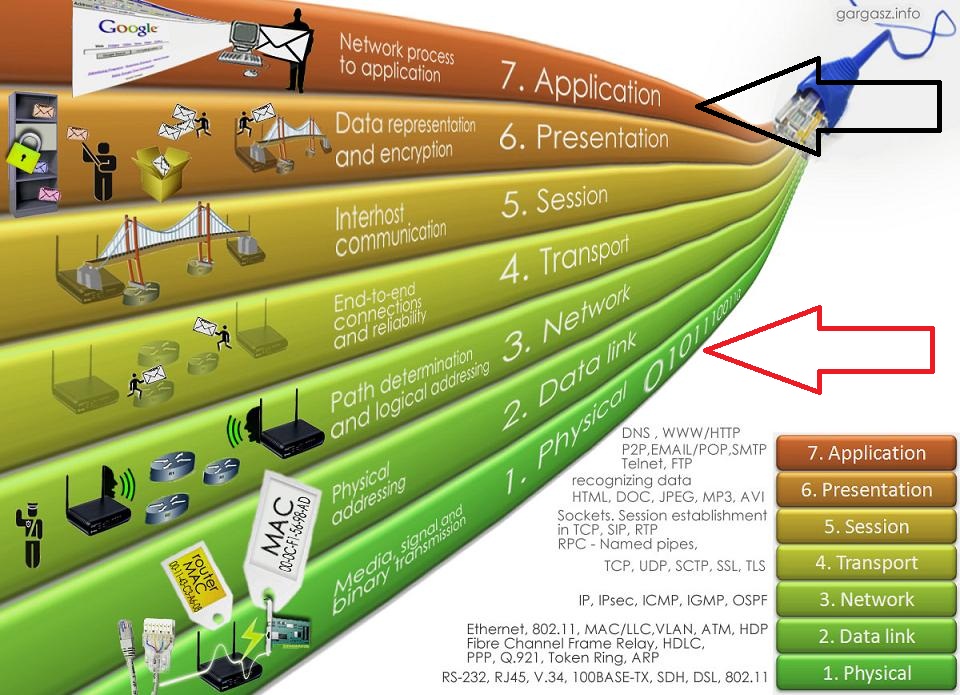
For many years I have been chanting Layer 1 or Layer 7. In other words, either own the network (OSI Layer 1 – the copper, the fiber or the airwaves) or own the customer at the desktop. Layer 7 was my way of saying software – SaaS or Managed IT or UC or Virtual Desktop. Legacy ISPs have
provided their value-add at the data link (Layer 2) or network (Layer 3) layer. This resale model is difficult and not very profitable.

Since then, many members of FISPA have embraced a hybrid business model of resale, fixed wireless, fiber and managed services, combining several OSI layers.

Today, the business strategy of a service provider has to be about the Customer Experience (CX). Service delivery by the Big Guys is as automated as they can make it. That provides great benefits to the cost of service delivery, but it wreaks havoc on customer service.

“Profits follow customer satisfaction, not the other way around,” wrote famous management consultant Peter Drucker. The strategy should be to have a culture of caring. As Peter Drucker said, “Culture eats Strategy for breakfast.”

A few years ago Rackspace and Zappos were the talk of the business world due to Rackspace’s Fanatic Support and Zappos’ CEO touring the country about culture and happiness. Comcast and AT&T have yet to embrace any of those mantras. But that is good for you!

If you look at the UCaaS sector as an example, there isn’t a provider that stands out for service delivery. That could be the differentiation point for that sector and would result in decent word of mouth, the best social marketing you can get.

The Customer Experience in telecom is pretty awful after the contract is inked. It is at these points when you win or lose future business. Even if they stay through the contract, the bad taste in their mouth from poor customer experience will be with them. The big complaint during a network outage isn’t the outage itself; customers understand that. It is the lack of communications that is the issue. Customers seek clear communications acknowledging the outage, the estimated repair time, etc. That goes into CX.

Every touch of the customer goes into CX – from the installer cleaning up after himself to the billing admin’s friendly demeanor. On and on at each touch point is a chance to keep or lose a customer. It is also an opportunity to turn a customer into a brand evangelist. An evangelist will tell people about your service.

It doesn’t matter if you are an MSP, VAR, ISP or fiber operator, re-examine each customer touch point. One reason is to ensure that the processes and procedures are written down. Another reason is to get input from the people who work at that junction to provide feedback on ways to remove friction (and perhaps add some awesomeness).

Each touch-point is a chance to keep or lose a customer, and an opportunity to turn a customer into a brand evangelist that will tell people about your service. Current business strategies include customer feedback loops – for instance, implement a Board of Customers.

Internally, ensure that processes and procedures are documented, and create operational teams to get input from employees who work at every customer contact point (personal, phone, email, websites, portals and customer contact systems). Implementing a customer relationship management (CRM) system that all departments and all employees must use will increase your knowledge base on each customer, and empower employees to provide a better CX. Be sure to monitor social media and proactively provide feedback (and increase market awesomeness). It’s little things that end up being major: Follow-up emails; handwritten thank you notes; clear, simple communications; and follow-through are the hallmarks of customer experience, and the keys to future sales.

As Zig Ziglar said, “Sales is helping!”

If you design a culture of customer experience, sales will increase. Taking friction out of the way for customers will streamline some processes. Just the exercise of looking at all these touch points – of the whole service delivery process – will provide some upside. And it is all upside when you have a strategy to make the customer experience better.


Peter Radizeski is a telecommunications consultant and analyst with RAD-INFO INC.

Telecom Tidbits # 2469

From the Global Technology Distribution Council 2018 Outlook report.

More than 70% of vendors (VADs) expect double-digit revenue growth through distribution in 2018
• Cloud, security, IoT and data center focus areas rated at the top for channel progress this year
• Indirect business is rapidly accelerating, outpacing direct for the majority of surveyed companies
• Vendors ranked recruiting new types of solution providers as their #1 objective with distributors
• 64% of surveyed vendors cited vertical markets as primary channel business drivers

Good article on MITEL and how UC can be added to IOT sensors to trigger an Emergency response or customer service or a service call. THAT is where comms has to go. It has to be more than 400+ features from a PBX we slam into a server and call it cloud comms.