Peter Radizeski is Founder and President of RAD-INFO INC. He is an accomplished blogalyst, speaker, author and consultant. He has helped many service providers with sales training, marketing, channel development and business strategy. He is a trusted source of knowledge about the telecom sector. His honest and direct approach make him a refreshing speaker.

Look for his innovative ideas and analysis of current technology on his blogs.

Meet him at one of the many conferences he attends and speaks at.

Hire RAD-INFO today!

The Consumer Benefit of Mega-Mergers

“You may recall that AT&T justified their $69 billion acquisition of DirecTV by claiming their combined market power would result in more leverage in programming negotiations and lower costs. Cost savings that pretty clearly won’t be getting passed on to consumers. Rate hikes for both AT&T U-Verse and DirecTV customers will take effect January 28.” [DSLR]

AT&T saw a direct benefit of $15 per U-Verse subscriber with the DirecTV content contracts. And despite that, they are raising rates. Cord cutting will commence.

Every time there is a merger — like AT&T-BellSouth, CenturyLink-Qwest-Embarq — we are told how it is for the consumer benefit. Even when there are merger conditions, the entity finds a way to skirt delivering on its promises.

With all of the rate hikes and merger promises we should have Gigabit internet to every home in America. How is that working out?

The cablecos are looking to form one large entity – Charter-TWC-BrightHouse. For the consumer benefit. It is a big decision for the FCC.

The DOJ and the FCC have just one mandate: protect the consumer. Both have fallen on that mandate for most of my time in this industry. The DOJ hasn’t done anything since 1982.

In Canada, Shaw is making moves after completing the $1.2B acquisition of data center company ViaWest. “Canadian broadband giant Shaw Communications has announced that it’s buying Canadian wireless operator Wind Mobile in a deal worth around $1.6 billion.” [press release here].

Interesting to note that Shaw used to own US cable interests that today Bright House Networks owns [according to wikipedia].

There is a report that Freshdesk, a SaaS customer support firm, buys mobile engagement startup Konotor in an acquisition that will help Freshdesk’s mission to deliver omni-channel customer service.

Tags: , , ,
Related tags: , , , , ,

Related Entries

  • News Tidbits Part 2919Jul 30, 2015
  • Promises UnkeptJul 12, 2015
  • Spam Soap Going to J2 (with 7 Others)Feb 23, 2015
  • The RBOCs: Copper, Spectrum, Regulation and SalesFeb 03, 2015
  • A Bad Day for AT&TNov 30, 2011
  • AT&T Sneaks One InNov 27, 2011
    ATTBuysTMobile.jpg
  • The Leaked AT&T DocumentAug 26, 2011
    ATTBuysTMobile.jpg
  • Too Much Going On Aug 04, 2011
  • The Mobile Ecosystem BattleSep 28, 2010
    treo.jpg
  • A Little Channel Conflict Nov 24, 2015
  • TrackBacks
    | Comments | Tag with del.icio.us | On Rad’s Radar? Home | Permalink: The Consumer Benefit of Mega-Mergers


    Copyright On Rad’s Radar?

    The Consumer Benefit of Mega-Mergers

    “You may recall that AT&T justified their $69 billion acquisition of DirecTV by claiming their combined market power would result in more leverage in programming negotiations and lower costs. Cost savings that pretty clearly won’t be getting passed on to consumers. Rate hikes for both AT&T U-Verse and DirecTV customers will take effect January 28.” [DSLR]

    AT&T saw a direct benefit of $15 per U-Verse subscriber with the DirecTV content contracts. And despite that, they are raising rates. Cord cutting will commence.

    Every time there is a merger — like AT&T-BellSouth, CenturyLink-Qwest-Embarq — we are told how it is for the consumer benefit. Even when there are merger conditions, the entity finds a way to skirt delivering on its promises.

    With all of the rate hikes and merger promises we should have Gigabit internet to every home in America. How is that working out?

    The cablecos are looking to form one large entity – Charter-TWC-BrightHouse. For the consumer benefit. It is a big decision for the FCC.

    The DOJ and the FCC have just one mandate: protect the consumer. Both have fallen on that mandate for most of my time in this industry. The DOJ hasn’t done anything since 1982.

    In Canada, Shaw is making moves after completing the $1.2B acquisition of data center company ViaWest. “Canadian broadband giant Shaw Communications has announced that it’s buying Canadian wireless operator Wind Mobile in a deal worth around $1.6 billion.” [press release here].

    Interesting to note that Shaw used to own US cable interests that today Bright House Networks owns [according to wikipedia].

    There is a report that Freshdesk, a SaaS customer support firm, buys mobile engagement startup Konotor in an acquisition that will help Freshdesk’s mission to deliver omni-channel customer service.

    Tags: , , ,
    Related tags: , , , , ,

    Related Entries

  • News Tidbits Part 2919Jul 30, 2015
  • Promises UnkeptJul 12, 2015
  • Spam Soap Going to J2 (with 7 Others)Feb 23, 2015
  • The RBOCs: Copper, Spectrum, Regulation and SalesFeb 03, 2015
  • A Bad Day for AT&TNov 30, 2011
  • AT&T Sneaks One InNov 27, 2011
    ATTBuysTMobile.jpg
  • The Leaked AT&T DocumentAug 26, 2011
    ATTBuysTMobile.jpg
  • Too Much Going On Aug 04, 2011
  • The Mobile Ecosystem BattleSep 28, 2010
    treo.jpg
  • A Little Channel Conflict Nov 24, 2015
  • TrackBacks
    | Comments | Tag with del.icio.us | On Rad’s Radar? Home | Permalink: The Consumer Benefit of Mega-Mergers


    Copyright On Rad’s Radar?

    Unified Hope for UCaaS

    End of year buzz around unified communications (UC, UCaaDS, Hostd PBX, Hosted UC) is ramping up. All part of the predictions and trend watching for 2016.

    First, I have a shout out to my bud, Alex Doyle for this very nice video (commercial) for VZ UC&C. I have no idea if he is pitching the Cisco HCS platform or the Broadsoft VCE that he spent years sweating over.

    Apparently, Forrester is predicting that UC’s sell by date is the end of 2016. Like milk, UC is will go sour in the next 12 months. So much for all that talk about CAGR.

    I will agree with this statement: “It is how a vendor uses UC technology that will influence the next wave of enterprise communication and collaboration.” It is all about UX — the user experience. That is 3 steps after the sale – deploy, train, adopt.

    The case study company “Cresa saw high adoption of its new UC system because of the system’s flexibility to allow individual users to customize the service to fit their needs while maintaining uniformity across the organization.” The case study talks about Integration.

    The problem with HPBX has been that other than click-to-call there really wasn’t much integration. The providers are moving past them with acquisitions and alliances (like 8×8 and Fonality with Allstate and its practice management software).

    I keep seeing the staggering growth rates predicted for VoIP — it only happens if you count SIP trunking. UC is not growing that fast. Evolve IP surveyed businesses about UC. The results were anything but hopeful.

    “Most of the professionals who responded to the Evolve IP survey didn’t even know what “unified communications” means.” [CRN]

    Two-thirds of respondents said their phone was the tool they preferred to contact colleagues! So much for the death of the desk phone in the near term. ITSPs aren’t exactly pushing soft clients and mobile apps with bluetooth and headsets. No idea why — but they aren’t. Most ITSPs are still Polycom distributors with a softswitch.

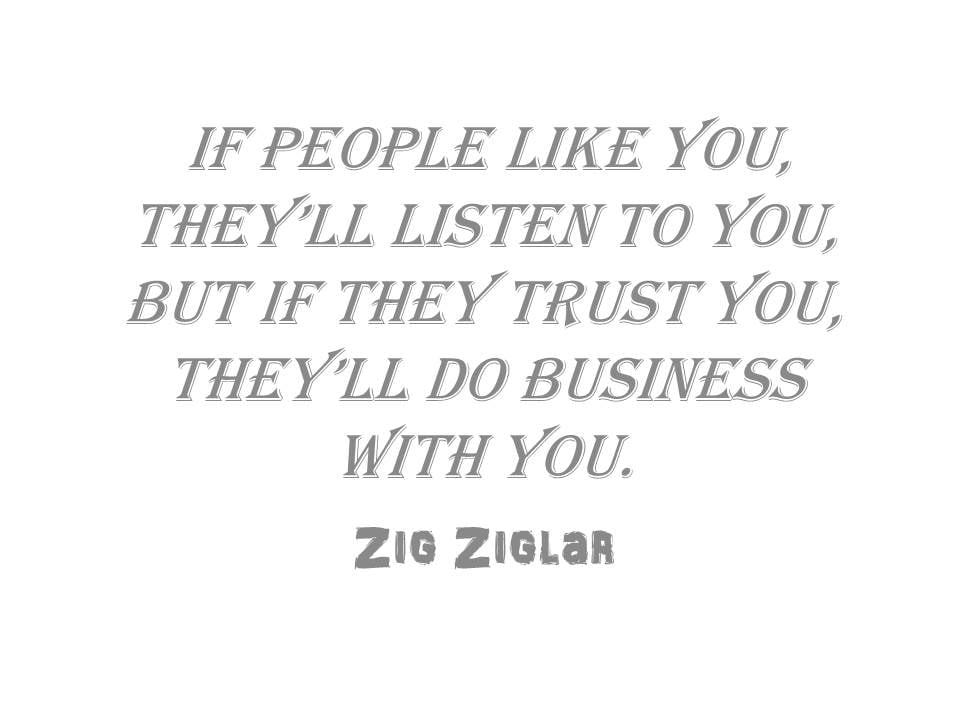
    The problem for buyers of UCaaS: “The most prominent was simply the challenge of selecting the right system, cited as a major obstacle by 22 percent of respondents. An additional 17.5 percent said selecting the right provider was a major obstacle, followed by 16.5 percent who cited employee adoption, and 13.5 percent who cited determining feature priorities.” NOTE: selling UCaaS is HARD! The buyer has to like the salesperson, listen to the salesperson, trust the salesperson, trust the service provider and believe that the service will help them and be deployed as promised! That is a lot to overcome!

    Ziglar-quote-like-trust.jpg

    “More than 80 percent of the organizations polled by Evolve IP host their own phone systems, but that’s changing.” More than 10 years and the premise PBX is still 80%! AND “only 16.5 percent said they’re planning a move to cloud-based” <- that is less than the predicted CAGR

    Don’t get depressed yet. Remember as I wrote earlier, just sell transactional networksmile

    Then there is this hopeful piece from CP interviewing Broadsoft, Vonage Business and Coredial:

    “Seventy percent of respondents believe cloud UC/PBX will capture at least half the SMB sub-100 employee market within five years, and expect 200 percent cloud UC growth for midmarket and in excess of 300 percent cloud UC growth for the large enterprise segment.”

    Expect, hope for, maybe some day. How much of that market will Cisco, Microsoft, AT&T and Verizon own? Probably more than anyone wants to admit in telecom. It is nice to hope and pray, but what ACTIONS will these providers take in 2016 to make deployment, adoption, User Experience and sales simpler?

    “BroadSoft believes service providers will seriously challenge Microsoft’s Skype for Business by offering an open, mobile and cloud-based UC and collaboration alternative with next-generation, real-time messaging, BSFT’s Behbehani said.” I’d like to hear HOW?

    Collaboration tools like Slack, Glip and HipChat will significantly disrupt email usage. I agree with that. Millennials will be okay with that; older workers probably not. (They want to call co-workers.)

    In another article, the prediction is that UCaaS will go Up-Market. I tend to agree since bigger companies used to high-end PBX and call center software will see cloud based contact center as a boon. They are used to feature-rich, high functionality AND Contact center — a good fit for the UC&C providers that can match up with these enterprises.

    There needs to be 4 things for UCaaS to grow as predicted:

    1. Integration — so it is more business functionality as a service and not just Hosted PBX. These are two opposing views of cloud comms. Plus it has vertical targets like with Allstate, CLIO, et al.

    2. Training — so much more training of users and sales teas is needed. And re-training annually for the customers and their employees. You need adoption to increase to reduce churn.

    3. User Experience — Slack took off – 2 million daily users in less than 2 years – due to its intuitive user interface. It isn’t rigid. It has APIs. It integrates with other software. Flexible. Ease of use. Mobile and desktop. Much needed.

    4. Better Targets. ITSPs chase the whole market. Each segment of the market wants a different story/message. Each segment has different hot buttons. No one provider can do it all. They have been trying and failing and failing and flailing.

    I am invested in the cloud comm — how many posts have I written about it; how many clients are ITSPs – but we are at a pivotal point in the VoIP industry. Some see it; some don’t. Consolidation, MS, Cisco, Google, mobile, consolidation, automation and more factors are kicking in. Nothing is as it was in 2003 when BSFT’s second customer rolled to market. Nothing.

    Tags: , , , , , ,
    Related tags: , , , , ,

    Related Entries

  • Is Mobile the Answer for UC?Oct 09, 2015
    voip-disruption.png
  • A View of UC from BroadvoiceSep 24, 2015
    ucass22.jpg
  • What the Studies About UC SayAug 25, 2015
  • VoIP Velocity, But Tie Your Shoelaces FirstNov 19, 2014
  • The Next Step in UCaaSAug 27, 2014
  • The UCaaS Business Right NowJul 24, 2014
  • Should Hosted UC Providers Offer Network?Jul 28, 2013
  • What is the Value Prop of VoIP?Apr 16, 2012
  • The Trouble with UC SalesJan 23, 2012
  • VoIP Consolidation Well UnderwayFeb 22, 2011
  • TrackBacks
    | Comments | Tag with del.icio.us | On Rad’s Radar? Home | Permalink: Unified Hope for UCaaS


    Copyright On Rad’s Radar?

    Apex Technology Services
    Sponsored by Apex Technology Services, a leading IT Services company

    Unified Hope for UCaaS

    End of year buzz around unified communications (UC, UCaaDS, Hostd PBX, Hosted UC) is ramping up. All part of the predictions and trend watching for 2016.

    First, I have a shout out to my bud, Alex Doyle for this very nice video (commercial) for VZ UC&C. I have no idea if he is pitching the Cisco HCS platform or the Broadsoft VCE that he spent years sweating over.

    Apparently, Forrester is predicting that UC’s sell by date is the end of 2016. Like milk, UC is will go sour in the next 12 months. So much for all that talk about CAGR.

    I will agree with this statement: “It is how a vendor uses UC technology that will influence the next wave of enterprise communication and collaboration.” It is all about UX — the user experience. That is 3 steps after the sale – deploy, train, adopt.

    The case study company “Cresa saw high adoption of its new UC system because of the system’s flexibility to allow individual users to customize the service to fit their needs while maintaining uniformity across the organization.” The case study talks about Integration.

    The problem with HPBX has been that other than click-to-call there really wasn’t much integration. The providers are moving past them with acquisitions and alliances (like 8×8 and Fonality with Allstate and its practice management software).

    I keep seeing the staggering growth rates predicted for VoIP — it only happens if you count SIP trunking. UC is not growing that fast. Evolve IP surveyed businesses about UC. The results were anything but hopeful.

    “Most of the professionals who responded to the Evolve IP survey didn’t even know what “unified communications” means.” [CRN]

    Two-thirds of respondents said their phone was the tool they preferred to contact colleagues! So much for the death of the desk phone in the near term. ITSPs aren’t exactly pushing soft clients and mobile apps with bluetooth and headsets. No idea why — but they aren’t. Most ITSPs are still Polycom distributors with a softswitch.

    The problem for buyers of UCaaS: “The most prominent was simply the challenge of selecting the right system, cited as a major obstacle by 22 percent of respondents. An additional 17.5 percent said selecting the right provider was a major obstacle, followed by 16.5 percent who cited employee adoption, and 13.5 percent who cited determining feature priorities.” NOTE: selling UCaaS is HARD! The buyer has to like the salesperson, listen to the salesperson, trust the salesperson, trust the service provider and believe that the service will help them and be deployed as promised! That is a lot to overcome!

    Ziglar-quote-like-trust.jpg

    “More than 80 percent of the organizations polled by Evolve IP host their own phone systems, but that’s changing.” More than 10 years and the premise PBX is still 80%! AND “only 16.5 percent said they’re planning a move to cloud-based” <- that is less than the predicted CAGR

    Don’t get depressed yet. Remember as I wrote earlier, just sell transactional networksmile

    Then there is this hopeful piece from CP interviewing Broadsoft, Vonage Business and Coredial:

    “Seventy percent of respondents believe cloud UC/PBX will capture at least half the SMB sub-100 employee market within five years, and expect 200 percent cloud UC growth for midmarket and in excess of 300 percent cloud UC growth for the large enterprise segment.”

    Expect, hope for, maybe some day. How much of that market will Cisco, Microsoft, AT&T and Verizon own? Probably more than anyone wants to admit in telecom. It is nice to hope and pray, but what ACTIONS will these providers take in 2016 to make deployment, adoption, User Experience and sales simpler?

    “BroadSoft believes service providers will seriously challenge Microsoft’s Skype for Business by offering an open, mobile and cloud-based UC and collaboration alternative with next-generation, real-time messaging, BSFT’s Behbehani said.” I’d like to hear HOW?

    Collaboration tools like Slack, Glip and HipChat will significantly disrupt email usage. I agree with that. Millennials will be okay with that; older workers probably not. (They want to call co-workers.)

    In another article, the prediction is that UCaaS will go Up-Market. I tend to agree since bigger companies used to high-end PBX and call center software will see cloud based contact center as a boon. They are used to feature-rich, high functionality AND Contact center — a good fit for the UC&C providers that can match up with these enterprises.

    There needs to be 4 things for UCaaS to grow as predicted:

    1. Integration — so it is more business functionality as a service and not just Hosted PBX. These are two opposing views of cloud comms. Plus it has vertical targets like with Allstate, CLIO, et al.

    2. Training — so much more training of users and sales teas is needed. And re-training annually for the customers and their employees. You need adoption to increase to reduce churn.

    3. User Experience — Slack took off – 2 million daily users in less than 2 years – due to its intuitive user interface. It isn’t rigid. It has APIs. It integrates with other software. Flexible. Ease of use. Mobile and desktop. Much needed.

    4. Better Targets. ITSPs chase the whole market. Each segment of the market wants a different story/message. Each segment has different hot buttons. No one provider can do it all. They have been trying and failing and failing and flailing.

    I am invested in the cloud comm — how many posts have I written about it; how many clients are ITSPs – but we are at a pivotal point in the VoIP industry. Some see it; some don’t. Consolidation, MS, Cisco, Google, mobile, consolidation, automation and more factors are kicking in. Nothing is as it was in 2003 when BSFT’s second customer rolled to market. Nothing.

    Tags: , , , , , ,
    Related tags: , , , , ,

    Related Entries

  • Is Mobile the Answer for UC?Oct 09, 2015
    voip-disruption.png
  • A View of UC from BroadvoiceSep 24, 2015
    ucass22.jpg
  • What the Studies About UC SayAug 25, 2015
  • VoIP Velocity, But Tie Your Shoelaces FirstNov 19, 2014
  • The Next Step in UCaaSAug 27, 2014
  • The UCaaS Business Right NowJul 24, 2014
  • Should Hosted UC Providers Offer Network?Jul 28, 2013
  • What is the Value Prop of VoIP?Apr 16, 2012
  • The Trouble with UC SalesJan 23, 2012
  • VoIP Consolidation Well UnderwayFeb 22, 2011
  • TrackBacks
    | Comments | Tag with del.icio.us | On Rad’s Radar? Home | Permalink: Unified Hope for UCaaS


    Copyright On Rad’s Radar?

    Apex Technology Services
    Sponsored by Apex Technology Services, a leading IT Services company

    The Commission Revenue Spiral

    I received an email today about the channel strategy for 2016 for Windstream: WIND is NOT paying agents for any new order under $1500. I wrote about this when I first heard in October. No idea how this will work out, but train wreck comes to mind.

    Windstream as a whole has had some much change – acquisitions, people, spin-offs – that I imagine there are no silly ideas in the conference room.

    When you talk to channel partners about telecom channel programs, there are few bright spots. Some telcos are so difficult to work with that after one try, you will never go back. Other CLECs, you learn what they can deliver on – and what is vaporware. Right now, it is more vaporware than service delivery. You would think after almost 20 years, telcos could deliver network and voice. No wonder VARs and MSPs don’t want to sell this stuff!

    When you think about this — go ahead! Think about it for a couple of minutes, I will wait… The channel and the telcos face the same challenge: declining pricing means less revenue!!!

    We – direct and indirect – have to sell more and more to meet quota. Translate that to mean sales have to get more transactional. Not something you want when you want higher ARPU, but to make quota, salespeople and agents will sell whatever they can to get paid. That will mean more transactional sales. Stay with me for a minute.

    You have a $3000 quota per month. You can sell three (3) 100MB DIA circuits and meet quota with minimal effort – or you can try to sell a converged network or a UC&C platform for $3K that will take weeks to close. (And how many of those projects have to be in your funnel to close 1? And how much time do they suck up? A lot.)

    Now that same $3000 is only going to produce about $450 per month in commission.

    There will be more channel conflict because directs won’t want to let any deal go. Deal registration is going to become a requirement.

    What is needed? Telcos have to take the friction out of sales and delivery. I just don’t think they can. (Do you?)

    235H.jpg
    Image credit: gratisography.com

    I don’t see this working out well for anyone. Too much debt. Declining or flat revenue. Too many mergers with half-assed integration. No spend on IT infrastructure to bring BSS and OSS current. Lack of domain knowledge from massive layoffs. Talent problem because of massive layoffs and the Nepotism. Absence of innovation. But, hey, on the bright side, it has been like this for years and will likely continue in its trajectory. Even with cable kicking their asses, the telco C-Suite can’t wake up.

    Meanwhile, all the VoIP players are trying to disrupt telco. However, it all comes back to the PSTN. Most people still have to connect to the old phone network for call completion — especially for rural call completion. Hard to disrupt something — even for Microsoft or Google — when at the end of the day, the business you are disrupting is operated by incumbent.

    The biggest disruption was the iPhone and Ma Bell helped launch that….

    And even the cellular world is as complicated as the wireline world. Even without unions to blame, the telcos still manage to make everything so freaking complicated, which is their primary problem.

    Tags: , , , , , ,
    Related tags: , , , , ,

    Related Entries

  • Is it Cloud versus Agents?May 02, 2012
    ecosystem-now.jpg
  • Non-competitive BroadbandDec 08, 2015
  • 7.5 Things Affecting the ChannelJul 18, 2012
  • Transactional Agents Called NamesMay 04, 2012
  • Basic Math for TNCIApr 26, 2012
  • What About Selling Cloud?Feb 21, 2012
  • The Telco Customer ExperienceOct 18, 2011
  • TNCI Files BKOct 10, 2011
  • Verizon Changes CommissionsJan 31, 2011
  • Which Docket, Dave?Feb 04, 2010
  • TrackBacks
    | Comments | Tag with del.icio.us | On Rad’s Radar? Home | Permalink: The Commission Revenue Spiral


    Copyright On Rad’s Radar?

    Apex Technology Services
    Sponsored by Apex Technology Services, a leading IT Services company